
Maize Germplasm Field Day Highlights Need for Innovation and Collaboration in Maize Research
Hyderabad, March 2026:
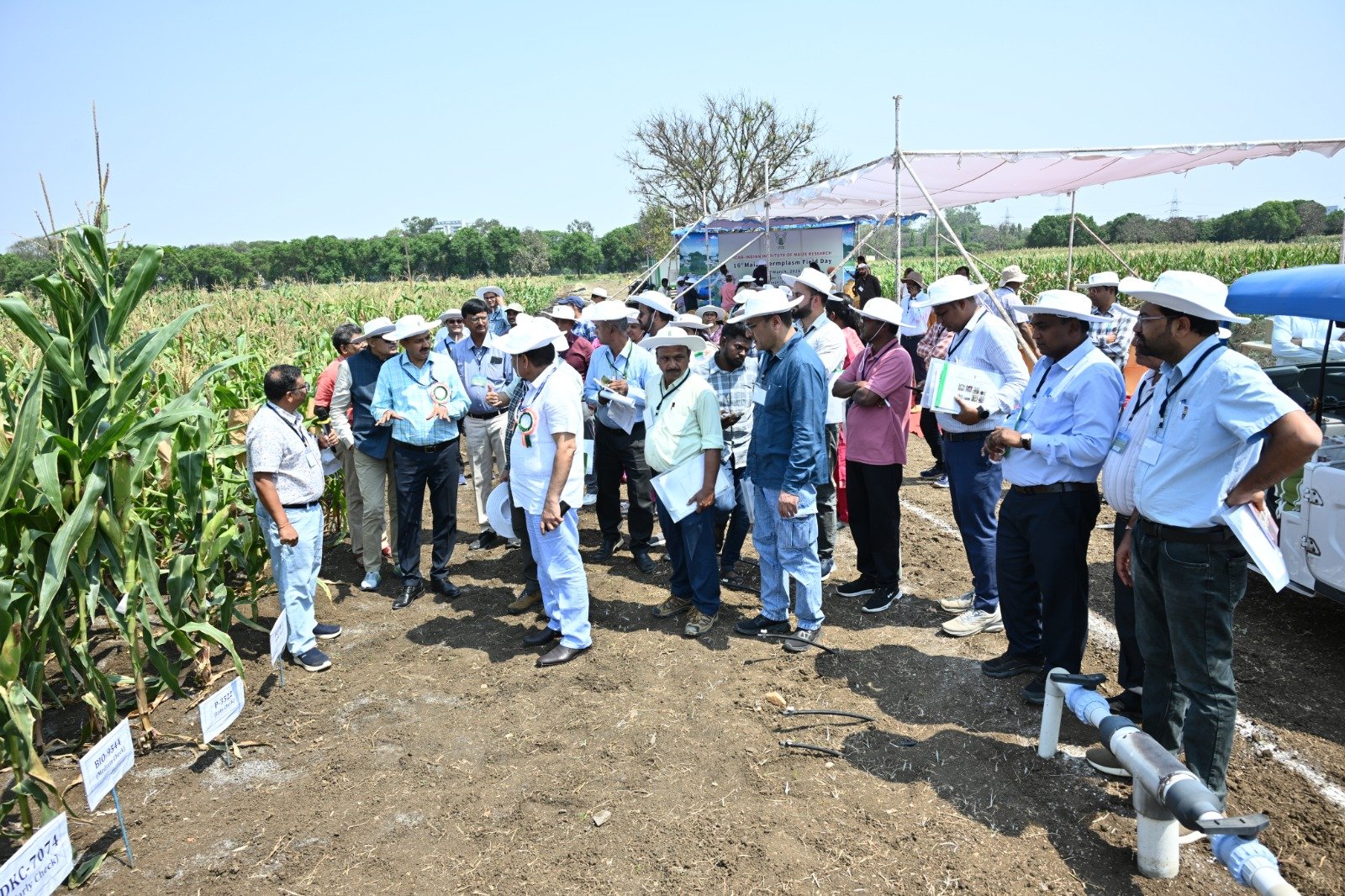
The ICAR–Indian Institute of Maize Research (ICAR-IIMR) successfully organized a Maize Germplasm Field Day at its Winter Nursery Centre in Hyderabad, bringing together scientists, researchers, extension personnel, and stakeholders from across the country. The event served as an important platform to showcase diverse maize germplasm, promote knowledge exchange, and strengthen collaborative research efforts aimed at enhancing maize productivity and sustainability.
Maize, currently the third most widely cultivated cereal crop in India, is gaining increasing importance due to its diverse applications in food, feed, fodder, starch, ethanol, and industrial sectors. With maize cultivation now spread over more than 12 million hectares, national production has shown consistent growth in recent years. Experts highlighted that the rising demand is expected to significantly increase in the coming decade, emphasizing the need for continued research on productivity enhancement and climate resilience.
Addressing the gathering, senior scientists stressed the critical role of maize in ensuring farmers’ income security and supporting multiple agri-industrial value chains. The field day provided participants with an opportunity to evaluate promising germplasm lines, observe crop performance under field conditions, and discuss breeding strategies for developing high-yielding, stress-tolerant hybrids.
Experts from national and international research organizations underlined the urgency of developing nitrogen-efficient and climate-resilient maize varieties in view of global challenges related to nutrient use efficiency and environmental sustainability. Advanced breeding approaches, including genomic tools and trait-specific germplasm utilization, were highlighted as key pathways to accelerate genetic gains.
Speakers also emphasized the importance of improved crop management practices and conservation agriculture for enhancing soil health, resource-use efficiency, and long-term productivity. Strengthening collaboration among public research institutions, private sector partners, and international agencies was identified as essential for achieving sustainable growth in maize production.
The programme included technical sessions featuring presentations on hybrid development, germplasm resources, and innovative research interventions. The event witnessed active participation from scientists associated with the All India Coordinated Research Project (AICRP) on Maize and other allied institutions, fostering meaningful scientific dialogue and knowledge sharing.
Overall, the Germplasm Field Day reaffirmed the commitment of ICAR-IIMR and its partners towards advancing maize research, promoting innovation, and addressing the emerging challenges of food security, sustainability, and farmer welfare in India.
.jpeg)