
Ranchi, April 2026:
The 69th Annual Maize Workshop was successfully organized on 9-11 April 2026 at Birsa Agricultural University (BAU), Ranchi, bringing together key stakeholders from across the National Agricultural Research and Education System (NARES). The three-day national event served as a vital platform for advancing dialogue on maize research, innovation, and sustainable production systems in India.
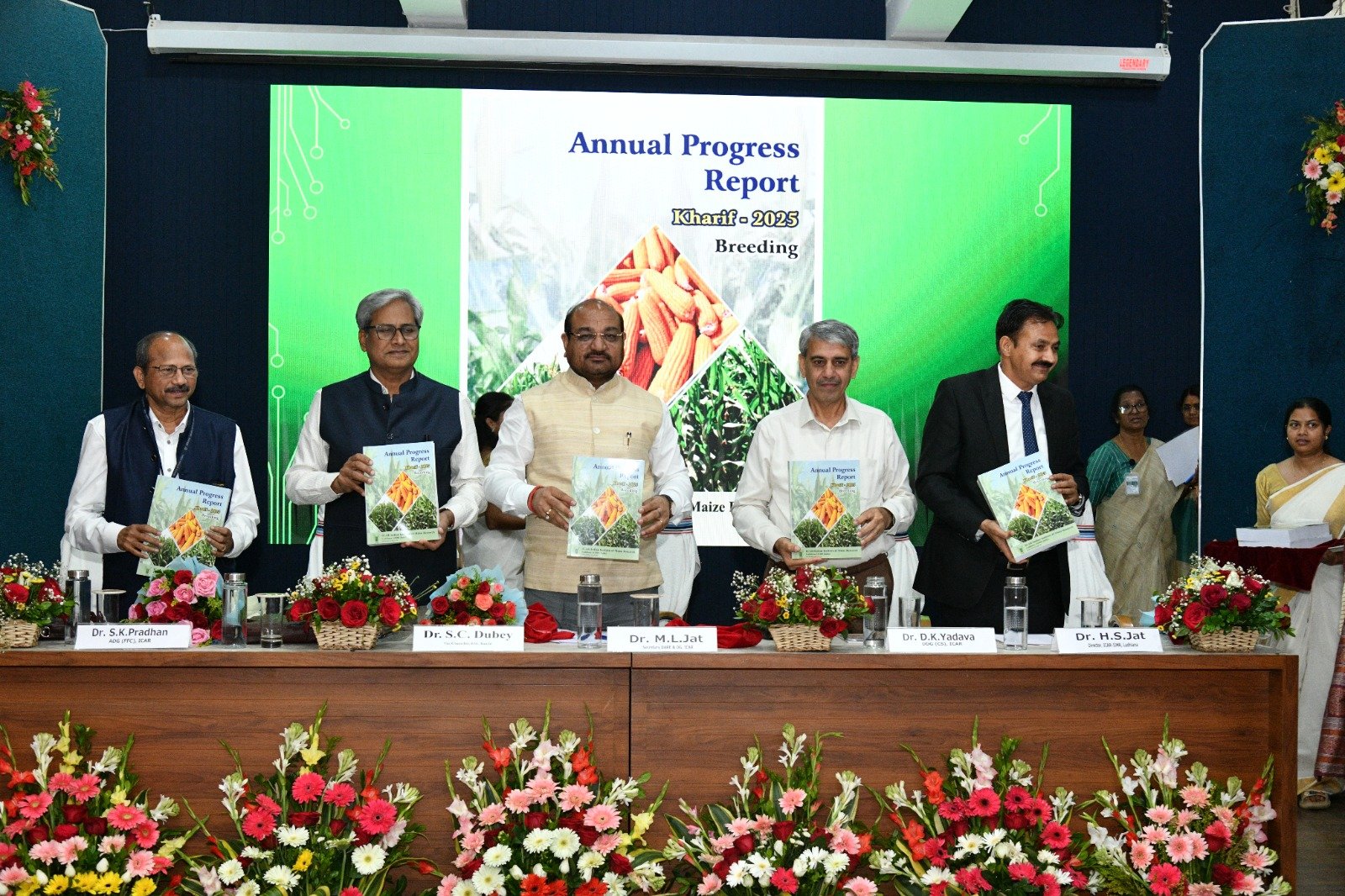
The inaugural session was graced by Dr. Mangi Lal Jat, Secretary (DARE) and Director General, ICAR, along with eminent dignitaries including Dr. S. K. Yadava, Dr. S. C. Dubey, Dr. S. K. Pradhan, and Dr. H. S. Jat. The workshop witnessed participation from scientists, researchers, and policymakers representing ICAR institutes, State Agricultural Universities, and partner organizations.
Maize continues to be one of the most important cereal crops in India, playing a crucial role in food, feed, fodder, and industrial applications such as starch and ethanol production. With rising demand across sectors and increasing emphasis on biofuel blending, experts noted that maize will be central to India’s agricultural growth and energy security in the coming years.
Addressing the gathering, Dr. Mangi Lal Jat emphasized the need for stronger integration between crop improvement and natural resource management under the AICRP framework. He highlighted that a holistic, systems-based approach is essential for enhancing maize productivity while ensuring sustainability and resilience in diverse agro-ecological conditions.
Discussions during the workshop also focused on strengthening the AICRP network through the development of Centres of Excellence across agro-climatic zones to drive region-specific innovation. Scientists highlighted the importance of data-based pest and disease prediction systems, with future integration into national platforms such as Bharat Vistar to enhance outreach and real-time advisory services.
Experts stressed the need to expand and diversify maize germplasm to broaden the genetic base and support the development of high-yielding, climate-resilient hybrids. Emphasis was placed on breeding strategies targeting nutrient-use efficiency, particularly in view of limited natural resources and the need for sustainable intensification.
The workshop also highlighted the importance of sustainable maize production systems, ensuring that expansion does not adversely impact other critical crops such as millets, pulses, oilseeds, and cotton. Intercropping systems were identified as an effective approach to enhance productivity and optimize resource use. From a production perspective, experts discussed the need for optimized plant density, improved agronomic practices, and mechanization in maize cultivation. Special focus was given to maize as a fodder crop, with recommendations to promote dual-purpose hybrids and improve their utilization in silage systems.
Speakers also emphasized strengthening public–private partnerships, particularly in the feed, ethanol, and starch sectors, to enhance value chain development and ensure better market linkages for farmers. It was noted that India is making steady progress toward achieving self-reliance in popcorn production by 2030, supported by ongoing research efforts.
The workshop further highlighted the need to strengthen institutional infrastructure, research facilities, and human resource capacity to meet future challenges in maize research. Participants reiterated that collaboration among research institutions, industry, and policymakers will be key to accelerating innovation and scaling impact.
The programme included technical sessions, presentations, and discussions covering diverse aspects of maize research, including crop improvement, resource management, and emerging technologies. The event facilitated meaningful scientific exchange and reinforced the importance of coordinated research efforts under the AICRP on Maize.
Overall, the 69th Annual Maize Workshop reaffirmed the commitment of India’s maize research community towards advancing innovation, promoting sustainability, and transforming the country into a global hub for maize research and development.
.jpeg)